
by OnSight | Aug 2023 | Polling
Voters identify homelessness, housing affordability as top issues for city to address; more than 6-in-10 feel ‘safe’ and support ‘sweeps’ or ‘cleanups’ of homeless encampments
DENVER — Voters are divided on whether the Mile High City is on the right track or headed in the wrong direction and identify homelessness and housing affordability as the top two issues for the city government to address, according to a Colorado Polling Institute survey of likely 2024 voters released today.
Among the notable findings:
- More than two-thirds (68%) of respondents say they feel safe in Denver;
- there is strong support (65%) for city “cleanups” or “sweeps” of homeless encampments that pose a health and safety risk;
newly elected Mayor Mike Johnston’s homeless plans are well-received (34% approve vs. 20% disapprove), but a plurality (41%) haven’t formed opinions;
- the cost of housing places “some” or “significant” financial strain on two-thirds (65%) of respondents, including nearly 9-in-10 (88%) of renters and;
- voters are generally pessimistic (45%) rather than optimistic (30%) about the progress being made on downtown Denver’s recovery;
“It is noteworthy that voters’ top concerns revolve around the city’s housing challenges. The mayor made homelessness a central issue in his campaign, and voters clearly support that priority,” said Democratic pollster Kevin Ingham of Aspect Strategic. “Yet, many are feeling burdened by their own housing costs and these results indicate they want the city to approach the housing issue with a wide angle lens.”
The poll of 414 likely 2024 Denver general election voters was conducted for the Colorado Polling Institute Aug. 17-18 by the bipartisan polling team of Cygnal and Aspect Strategic via a multi-mode mix of live calls and text-to-web responses. It has a margin of error of ± 4.72%.
The poll found voters divided on the direction of the city, with 44% saying it’s headed in the right direction and 44% saying it’s on the wrong track.
Addressing homelessness is a clear priority for most voters. In fact, it is the top priority across most groups, with the exception of those aged 18-29, who prioritize housing affordability and the cost of living.
“As we saw in polling during the mayoral election earlier this year, Denverites are strongly in favor of forcefully addressing the homelessness issue,“ stated Republican pollster Brent Buchanan of Cygnal. “The fact that homelessness is still the top issue by far could be the reason voters are pessimistic about the progress being made on downtown Denver’s recovery.”
In addition to homelessness (51%) and housing affordability (41%), voters identify crime and public safety (34%) and the cost of living (32%) as other top issues for the city to address.
Johnston, who took office in July on a promise to end homelessness in his first term, has a positive image among likely 2024 general election voters (46% favorable vs. 22% unfavorable for a +24 favorable rating), though nearly a third say they have no opinion (28%). or had never heard of him (3.5%).
Despite concerns over housing affordability and the financial burden of housing in Denver, half of voters think the city’s policies should prioritize listening to the concerns of residents even if that means new housing sometimes doesn’t get built as opposed to building new housing in all neighborhoods over objections from current residents (37%). Put another way, there is not overall opposition to what are typically framed as “Not in my backyard,” or NIMBY, arguments.
And even those who are most housing-burdened don’t necessarily make the link between housing costs and supply. Among those who say housing costs are a “significant” source of financial strain, 52% prioritize listening to concerns vs. 36% who say building more housing. Similarly, those who say “housing affordability” is a top issue for the city are evenly divided on this question (42% listen to concerns; 43% build more housing).
A slight majority have a favorable view of the Denver Police Department (51% favorable vs. 43% unfavorable). And, while two-thirds (68%) say they feel safe in Denver, the feeling is soft, as a majority (50%) say “somewhat safe” compared to “very safe” (18%).
The poll also looked at two election-related issues that have been in the news and could come before Denver City Council in the weeks ahead.
Nearly two-thirds of voters (63%) support limiting elected officeholders — including mayor, auditor, clerk and recorder, and city council — to no more than two consecutive four-year terms, including 41% who strongly support the idea. Officials can currently serve up to three consecutive terms.
And, by a 2-to-1 margin (48% to 24%), voters said they would support instituting ranked-choice voting for municipal elections.
CPI is a newly launched nonprofit whose mission is to elevate the public dialogue and promote informed decision-making through timely, trustworthy, and nonpartisan public opinion research on the most important issues facing Coloradans.
“Our mission is to provide relevant, actionable, nonpartisan public opinion research on issues in Denver and across the state we love,” said founder David Carlson. “We’ll be relentlessly transparent with our findings and dedicated to high-quality research. We’re proud of the talented team of pollsters and advisors from across the political spectrum we’ve brought together to achieve that goal.”
###
Note: Download toplines and crosstabs. Additional analysis can be found online at: copollinginstitute.org
by OnSight | Apr 2023 | BIkes
We love cycling, and were happy to lend a hand when it came to spreading the word on efforts to resurrect and re-imagine the long-dormant Boulder Valley Velodrome.
Media Contact:
Curtis Hubbard
curtis@onsightpa.com
(303) 908-2378
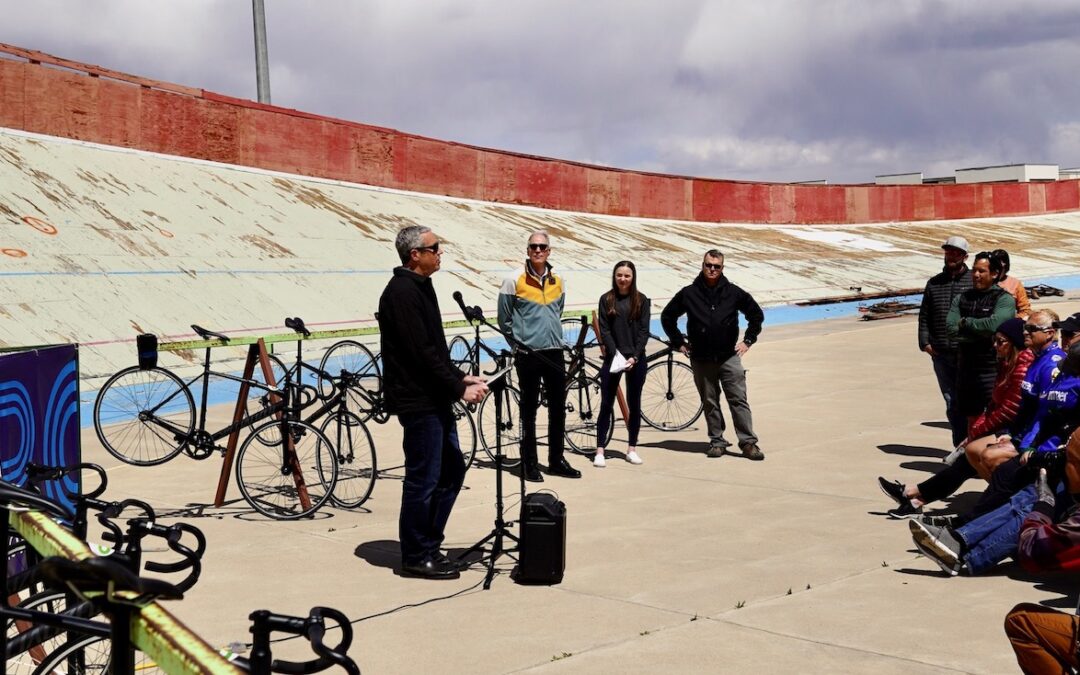
Erie, Colo. — The long-dormant Boulder Valley Velodrome will be resurrected under an ambitious plan announced Thursday to restore the 250-meter cycling track as a training ground for competitive cyclists and a hub for family-friendly community events.
The iconic, red-walled Velodrome has been closed to the public for more than three years. It is now under contract to be purchased by BVV Holdings LLC and will be operated by the Team Colorado Cycling nonprofit.
“The list of needed repairs is long and expensive, but we are passionate about meeting the demand that exists for a cycling track of this caliber and its potential as a hub for family-friendly activities like ride-in movies, concerts, festivals and food trucks,” said Todd Stevensonof Team Colorado Cycling. “Our first step is to tap into community support to help pay for needed repairs with the goal of re-opening full-time with weekly racing and other events starting early this summer.”
Crews are already working to repair and restore the plywood track and operators hope to have fresh coats of Sherwin-Williams-supplied paint applied in time for the track’s re-opening.
Hindered by the historic Boulder County floods of 2013, a tornado-level wind event in 2015, and then the COVID-19 outbreak, the velodrome on the outskirts of Erie has been shuttered and closed to the public since October 2019.
“Natural disasters and the pandemic delivered a one-two punch that made it next-to-impossible for this facility to meet its potential as a magnet for cyclists and a hub for community activity, but we think the time is right to resurrect this as a world-class cycling track, ” said Cari Higgins, a member of the group that has agreed to purchase the Velodrome from its original owners.
Higgins, a former national champion track cyclist and Chair of the USA Cycling Board of Directors, has led efforts to save the Velodrome for years.
“We are confident that the cycling community will rally to the cause and that this venue can once again host recreational and elite cyclists — whether they entertain Olympic dreams or simply feel the need for speed,” Higgins said.
The Velodrome, which opened in 2015, was the brainchild of former owners Doug Emerson (owner of University Bikes in Boulder) and Frank Banta. The pair first put it on the market in 2017, hoping to find buyers whose passion for cycling and vision would take the facility to the next level.
In October 2019, the Velodrome was under contract with buyers who planned to demolish it. Higgins and other cycling enthusiasts worked out a last-minute deal to purchase the property and save the track, but it later fell through as a result of the worldwide lockdown and financial pinch from the coronavirus pandemic.
With new owners on board, Team Colorado Cycling has launched a gofundme campaign with the aim of raising at least $75,000 to help pay for needed repairs and improvements. Among them: Stripping chipped and faded paint from the track surface; board-by-board repair and replacement; raising sections of concrete that have settled; and repainting the structure inside and out. Additional improvements include landscaping work and general cleanup; repairing and tuning the facility’s bike fleet; and opening a new rider lounge, as well as a stretching and workout area. Contributions tare tax deductible.
The Boulder Valley Velodrome is a landmark on the west side of County Line Road at the southern end of the planned Erie Town Center.
“The Erie Town Center is envisioned as nearly 400 acres combining mixed-use development with parks and open space, and the reactivation of the Boulder Valley Velodrome will help us meet the vision for creating a unique and thriving community center,” said Erie Town Administrator Malcolm Fleming.
The Boulder Valley Velodrome is one of four, international-standard 250-meter tracks in the U.S. And it is one of just two wood tracks of that length in the U.S. The other, in Carson, Calif., will host track cycling events in the 2028 L.A. Summer Olympics. As such, the facility has long held promise as a high-altitude training ground for current and future stars of the sport.
“The passion for cycling in Colorado is among the best in the country, if not the world,” said Makala Jaramillo, an emerging star from Colorado on the junior cycling circuit with Team USA and Sonic Boom Racing. “By restoring the Boulder Valley Velodrome we can bring new people to the sport and develop the next generation of cycling legends from the United States.”
Operators have planned a public open house at the track from 2-5 pm on May 6th.
For additional information and to make a donation, visit: BoulderValleyVelodrome.org
TIMELINE
April 2023 — BVV Holdings LLC agrees to purchase Velodrome, names Team Colorado Cycling operator.
May 2020 — Sale falls through as a result of pandemic. Velodrome put back on market.
Feb. 2020 — Velodrome goes under contract to a group planning to keep it open to cyclists.
Dec. 2019 — Cycling supporters announce last-ditch effort to purchase track.
Oct. 2019 — Velodrome goes under contract to buyer who plans to demolish facility; closes to public.
Oct. 2017 — Owners put Velodrome on market for $4.7 million.
Jan. 2015 — Boulder Valley Velodrome officially opens.
Sept. 2013 — Historic Boulder Valley flooding further delays construction.
Aug. 2013 — Construction set back by serious damage sustained in high-wind event.
May 2012 — Construction begins.
June 2010 — Erie town leaders approve construction.
2008 — Doug Emerson and Frank Banta form Boneshaker LLC and purchase 4.2 acres in Erie to be the home of the Boulder Valley Velodrome.
###
by OnSight | Nov 2021 | Polling
Annual report will highlight top policy, issue concerns among Latinos in Colorado
DENVER – Ensuring a living wage and safe working conditions and reforming immigration laws are among the top policy concerns of Latino voters and Latino leaders in Colorado, according to results of the first-ever Colorado Latino Policy Agenda released today.
The annual Colorado Latino Policy Agenda will provide ongoing insight each fall for elected officials, community leaders, media, and others into the demographic makeup and views of Latinos in Colorado on pressing political, policy, and other issues in the state.
DOWNLOAD FULL REPORT
The report was led by the Colorado Organization for Latina Opportunity and Reproductive Rights (COLOR), Voces Unidas de las Montañas, Colorado Democratic Latino Caucus, and Protégete of Conservation Colorado. Other partners include the Political Science Department at Metropolitan State University of Denver and BSP Research.
“The Colorado Latino Policy Agenda offers an opportunity for elected officials and community leaders to explore areas of agreement, work to meet the diverse needs of Latinos in the different regions of the state, and design and deliver appropriate and timely policy solutions for the state’s growing Latino population,” said Dusti Gurule, Executive Director of COLOR.
Intended for use by lawmakers and other officials in the year ahead and as a baseline for future efforts, the 2021 Colorado Latino Policy Agenda was informed by three research tools:
-
A statewide poll of 1,000 Latino adults was conducted via phone and online from August 16 – September 1, 2021;
-
Responses from 168 Latino community leaders in an online survey this fall; and
-
In-person listening sessions were held in Greeley, Glenwood Springs, and Pueblo.
“This research provides unprecedented insight into the issues that are important to Latino voters and Latino community members —whether they’re from the Western Slope, the Denver-metro area or other communities east of the Continental Divide,” said Alex Sánchez, Executive Director of Voces Unidas. “While there are issues that unite us — we also see examples of issues with different intensity at the local level.”
Other top issues from the statewide poll of 1,000 Latino adults include improving wages and benefits for seasonal workers and taking aggressive steps to address drought and clean water access. Among Latino leaders, top issues included increasing access to mental health services and decreasing the cost of college tuition.
 Generally, respondents to both the statewide poll and the Latino leaders survey support public policies that expand access to services and resources to a wider segment of the state’s population. This includes high support for expanding access to health insurance for Colorado residents, ensuring access to safe abortion and reproductive health, and ensuring all state residents have access to high-speed internet.
Latino residents and community leaders are also very concerned with climate change and strongly support policies that will transition the state toward clean energy production. There is similarly high support for providing information and resources to ensure that Latinos and other disproportionately impacted communities are included in decisions made to address climate change and to promote environmental justice.
“Latinos across the state are growing political power and it’s essential that policymakers listen to our community priority issues and craft solutions that reflect our needs and bring our voices to the decision-making table,” said Beatriz Soto, Director of Protégete for Conservation Colorado.
 As highlighted in a separate release in October, the research makes clear that COVID-19 has devastated Colorado’s Latino community. Nearly half of all respondents to the statewide poll of Latino adults and the survey of 168 Latino leaders across the state reported that they lost a friend or family to COVID-19. The survey research also provides insights regarding the economic challenges that the Latino community in the state has faced and continues to face during the pandemic.
“Policymakers should look to the Colorado Latino Policy Agenda’s findings and work to more directly engage the Latino community in policy decisions,” said Rob Preuhs, Chair of the Political Science Department at MSU Denver. “The research shows that Latinos are highly interested in being more engaged in the political process but often feel that the voice of the Latino community is excluded from important political decisions.”
During the listening sessions held this summer and fall in Greeley, Glenwood Springs, and Pueblo, it was clear that issues pertaining to undocumented immigrants exist across communities. Participants in Glenwood Springs and Pueblo also identified education issues among their top selections, while environmental issues were among the top selections in Pueblo and Greeley.
“This research is the first of its kind — never before in Colorado have we received such nuanced data about the needs and priorities of the Latino community. This data will not only inform our Colorado Democratic Latino Caucus policy priorities as we look ahead to addressing systemic inequities in the next legislative session — but we expect our colleagues at the Capitol, and decision-makers at all levels of government to consider the needs, priorities, and growing political power of Latino communities across Colorado,” said Sen. Robert Rodriguez, Co-Chair of the Colorado Democratic Latino Caucus, a nonprofit organization.
###
by OnSight | Oct 2021 | Polling
Sixty percent of respondents in Latino survey had hours, pay cut or had someone in household lose job during pandemic; 56% had difficulty paying bills or utilities
DENVER – The COVID-19 pandemic took a significant toll on the economic well-being of Latino families across Colorado who are now looking to elected officials to bolster opportunities for jobs and affordable housing and to address escalating cost-of-living, among other issues, according to results of a statewide survey of 1,000 Latino adults.
Key findings on how the pandemic impacted Latino families include:
- 60% had their work hours or pay cut, or had someone in their household lose their job;
- 56% had difficulty paying their bills or utilities;
- 50% had difficulty paying their rent or mortgage;
- 33% have not had enough food to eat.
“It is almost impossible to overstate the pandemic’s impact on the Latino community in Colorado,” said Alex Sánchez, executive director of Voces Unidas de las Montañas. “When it comes to basic economic indicators like having the money to pay bills in order to keep a roof over their heads and put food on the table, the survey provides a sobering glimpse at how hard the economic recession caused by the pandemic has been for the state’s largest ethnic minority.”

Added Dusti Gurule, executive director of Colorado Organization for Latina Opportunity and Reproductive Rights (COLOR): “Latinos across the state were faced with difficult and sometimes dire decisions during the pandemic. Now, they are looking to officials at the state and federal levels to deliver policies to improve the outlook for jobs and the economy as well as to address costs associated with necessities like housing, health care, and internet access.”
The poll of 1,000 Latino adults in Colorado was conducted Aug. 16-31 by BSP Research on behalf of the Colorado Organization for Latina Opportunity and Reproductive Rights (COLOR), with additional funding from the Political Science Department at Metropolitan State University of Denver, the Colorado Democratic Latino Caucus, Voces Unidas de las Montañas, and Protégete of Conservation Colorado. Complete results will be released next month as part of the organizations’ plans to research and highlight the issues facing Colorado’s Latino community.
Other findings from today’s release include: Latinos on the Western Slope were more likely to not have enough food to eat (40%) and have difficulties paying for their rent or mortgage (64%) than those in other areas of the state. Latinos who live in the Denver metro area were the most likely to have had their work hours cut or reduced (64%).
Latinos also made tough decisions in order to manage household finances during the pandemic. This includes nearly 34% who used up all or most of their savings to pay for their expenses; 19% who had to skip a monthly car, rent, or mortgage payment; and 20% who postponed or cut back on health-related expenses. The pandemic had a significant impact on housing stability, with 14% of respondents reporting they moved or changed their housing situation as a result.
An alarming 42% of Colorado’s Latino population had $1,000 or less in savings for financial emergencies — and a stunning 20% had $100 or less in savings. Furthermore, only 37% of Latinos in Colorado are “very confident” that they can pay for basic living expenses, such as food, housing, and utilities.

One of the more troubling findings from the survey is that 11% of Latino residents in the state have turned to pay-day or easy loan companies that charge high interest rates. The use of pay-day or easy loan companies is particularly high on the Western Slope, where nearly 1 in 5, (19%) said they had turned to this option.

Policy Priorities of the Latino Community in Colorado
Respondents were also asked to identify the most important policy issues the state and federal government should address. At the federal level, creating more jobs and addressing the economy were at the top of the list. The high salience on economic well-being to the Latino community is reinforced by “addressing affordable housing” and “the rising cost of living” emerging as key issues INAL for Latinos at the state and local level.
Small businesses were hit particularly hard by the pandemic, and Latinos are disproportionately likely to be employed by small businesses, which helps explain the high support (88%) to set up a state fund to help Latino-owned small businesses.
The rising cost of housing was already a major issue in the state prior to the pandemic, but increased in salience over the past two years. This resulted in nearly all (88%) Latinos in Colorado supporting new housing requirements that developers must include affordable housing.
The pandemic also made clear how vital access to high-speed internet is for all aspects of life, including working and educating our children. Latinos overwhelmingly support (86%) the state providing high-speed internet access to all Coloradoans. There is also a recognition that access to high-speed internet and other infrastructure must extend to residents of rural areas of the state. For example, 79% of the sample supports bolstering economic opportunities outside of the Front Range.

This report draws from a statewide survey of Latino adults across the state of Colorado during a critical period in the state’s history. The survey makes clear that the COVID-19 pandemic has been devastating to the Latino community. This information should be of high value to the Legislature’s three newly-formed task forces on Economic Recovery and Relief, Affordable Housing, and Behavioral Health which will oversee the distribution of federal American Rescue Plan Act funds to Coloradans. Additional issue priorities, policy preferences, and political values of the Latino community in Colorado will be included in the release of full survey results next month.
Download limited toplines
Survey Methodology: The survey of 1,000 total completed interviews with Latino adults in the state of Colorado resulted in an overall margin of error of +/- 3.1%. Survey respondents were randomly selected in a blended approach including web-based and telephone interviews (both landlines and cell phones) and was available in both English and Spanish at the respondent’s discretion. Respondents were recruited with up to 5 contacts to improve the representativeness of the sample. Data were compared to the best-known estimates of the U.S. Census Current Population Survey (CPS) for the demographic profiles of Colorado adults and post-stratification weights were applied to bring the data into direct balance with Census estimates. The poll was led by Dr. Gabriel Sanchez and Dr. Matt Barreto from BSP Research, LLC.
###
by OnSight | May 2021 | Polling
Majorities approve of Gov. Polis’ handling of the pandemic, support a ban on the sale of assault weapons in Colorado
DENVER — Majorities of Coloradans are embracing COVID-19 vaccines and have favorable views of Gov. Jared Polis, according to the latest Keating–OnSight–Melanson (KOM) Colorado Poll™ released Monday.
Other notable findings:
- 6-of-10 voters approve of Polis’ handling of the pandemic (61% approve, 33% disapprove);
- and a majority support a ban on the sale of assault weapons in Colorado (57% support, 40% oppose).
 This round of KOM polling has been released in two parts. Part one measured voter attitudes toward several federal officials and policies. Part two, which is being released today, measures voter attitudes on state issues — notably the COVID-19 pandemic and vaccines.
Asked about their vaccine status, 63% of respondents said they had received at least one dose and 10% said they planned on being vaccinated, for a planned vaccine rate of 73%.
“The encouraging news as we enter year two of the pandemic is that we see strong support for vaccines across almost every demographic,” said pollster Chris Keating. “But there is clearly more work to do to improve rates among Republicans and in rural areas, where the number of people who have or plan to be vaccinated lags.”
Among Republicans, 56% have received or plan to receive a vaccine, and in the 53 rural counties, the figure is 64%.
A total of 15% of respondents said they don’t plan on being vaccinated. Allowed to pick from multiple reasons for not getting the vaccine, their top selections were that the threat of COVID-19 is overstated (50%), that they don’t think vaccines are safe (49%), and that the vaccine was developed too quickly (47%).
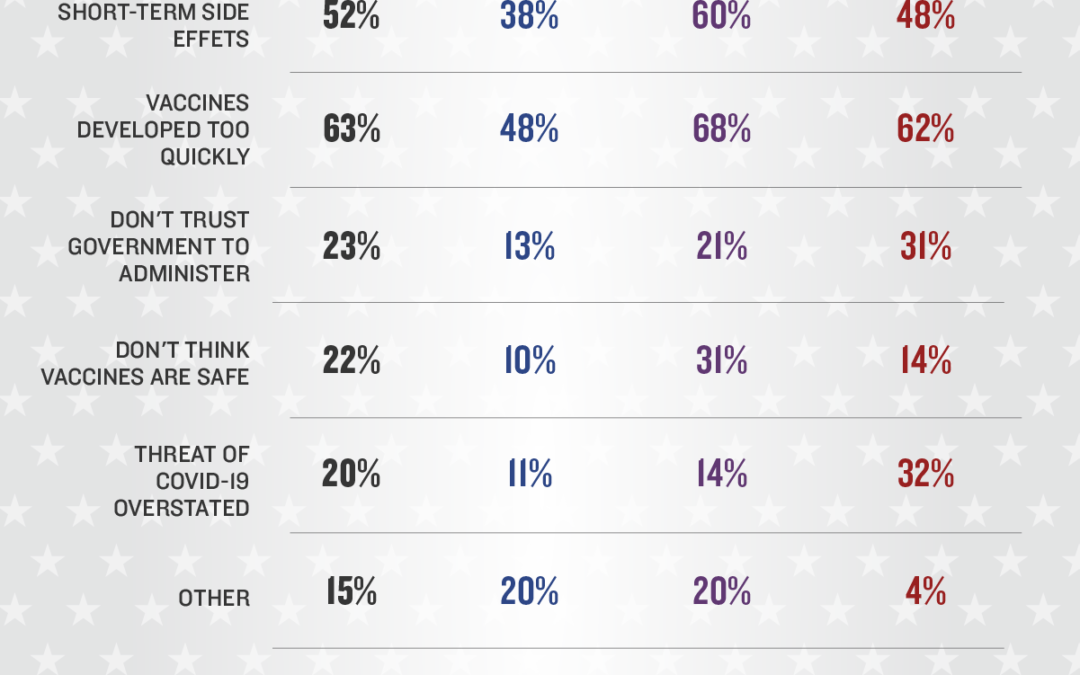
Another 12% said they are not sure whether they will receive the vaccine. Their top reasons for uncertainty: the vaccine was developed too quickly (63%), concern about short-term side effects (52%), and mistrust of the government to administer vaccines (23%).
“Keep in mind this is a likely-voter universe of adults and there is not yet a vaccine for those under age 16, so the percentage of Coloradans who aren’t — or won’t be — vaccinated is higher than our findings,” said Curtis Hubbard, of OnSight Public Affairs. “Among the things COVID-19 has taught us: it doesn’t care about political affiliations or where you live. Returning to something that resembles normal is going to require higher percentages of us to get vaccinated.”
 Colorado voters feel good about Gov. Polis (58% favorable, 38% unfavorable) and give him high marks on the job he is doing on the coronavirus outbreak. A 2-to-1 majority (61%) approve of the job he is doing compared to one-third (33%) who disapprove.
“Gov. Polis has navigated the last 13 months quite well and Colorado voters have noticed,” said Mike Melanson, a Democratic strategist. “Balancing safety and the economic well-being of the state has not been an easy task, but he has largely succeeded.”
Finally, asked about a law that would ban the sale of assault weapons in Colorado, a 57% majority support it and 40% oppose it.
An assault-style weapon similar to an AR-15 was used to kill 10 people shopping at a Boulder, Colorado, King Soopers on March 22 of this year. In 2012, an assault weapon was used to kill 12 people watching a movie in Aurora, Colorado. Colorado women are more supportive of a ban on assault weapons (63% support to 34% oppose), while men are more divided on the issue (50% support to 48% oppose).
 A ban on the sale of assault weapons in Colorado is overwhelmingly supported by Democrats (87% support), plus a majority of Unaffiliated voters (57% support) and among voters in the Colorado suburbs (57% support to 42% oppose). The ban on the sale of assault weapons is opposed by 3-of-4 Republicans (74% oppose).
Conducted regularly by Keating Research, OnSight Public Affairs, and Mike Melanson — the KOM Colorado Poll provides informative, accurate results using online surveys and was Colorado’s most accurate in the 2020 and 2016 Presidential elections and the 2018 Colorado Gubernatorial race.
For complete results, please see the memo, toplines, and crosstabs.
###
The April KOM Colorado Poll™ was based on online interviews with 528 likely Colorado voters, April 20-26, 2021, and had a MOE of plus or minus 4.3%.